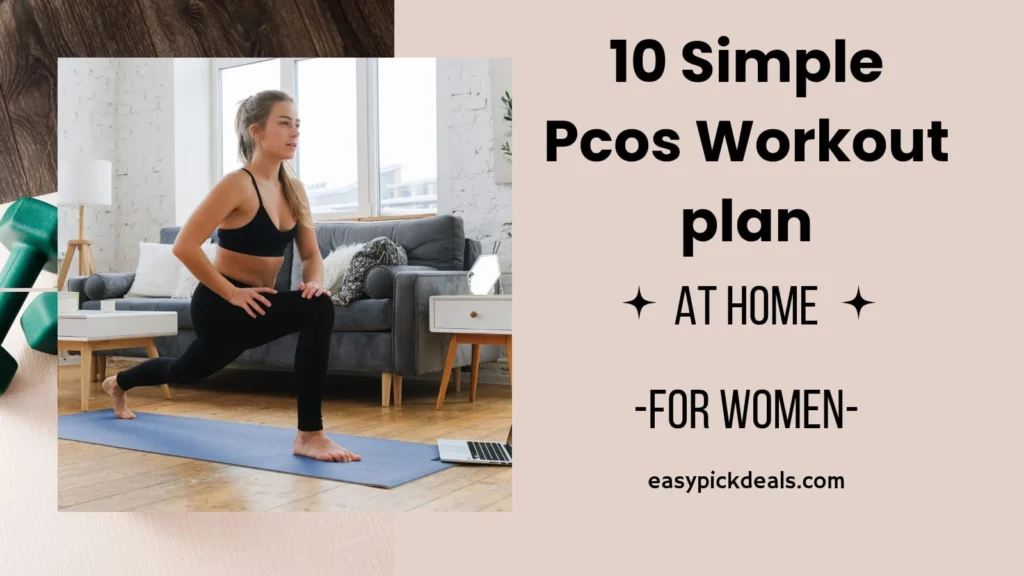
Follow a simple PCOS workout plan at home for women designed for the USA lifestyle. Improve hormone balance, support weight loss, and boost energy with easy beginner-friendly exercises and a printable 30-day workout planner.
Managing PCOS doesn’t always require expensive gym memberships or intense workouts. A simple PCOS workout plan at home for women can help improve insulin sensitivity, support hormone balance, reduce stress, and promote sustainable weight management — all from the comfort of your home.
Key Takeaways
- Exercise improves insulin control and reduces PCOS symptoms when done consistently.
- This beginner-friendly workout plan at home mixes cardio, strength, and flexibility for balanced fitness.
- Ten practical exercises are included with step-by-step instructions and modifications for different levels.
- Track progress by measuring energy, mood, sleep, and body changes—not just the scale.
- Make it sustainable: short daily sessions (minutes per day) add up to big benefits for women with PCOS.
Understanding PCOS and Why Exercise Matters
PCOS, short for Polycystic Ovary Syndrome, is a common hormonal condition affecting many women of reproductive age. It alters hormone levels (often increasing androgens), disrupts menstrual cycles, and can create metabolic challenges such as insulin resistance that affect overall health and quality of life.
Why a Simple PCOS Workout Plan at Home for Women Works
Women with PCOS often experience hormonal imbalance, weight gain, insulin resistance, and chronic stress. Exercise plays a powerful role in managing these symptoms naturally.
A structured simple PCOS workout plan at home for women helps:
✔ Improve insulin sensitivity
✔ Support healthy weight management
✔ Reduce inflammation
✔ Lower stress hormones
✔ Improve mood and energy
✔ Regulate menstrual cycles
The key is consistency + low-impact movement + strength training + stress reduction.
Medical Disclaimer
Safety first: This article provides general information about exercise for polycystic ovary syndrome (PCOS) and is not medical advice. Talk with your healthcare provider before starting any new exercise plan to make sure it’s safe and appropriate for your health and medications.
Exercise is an important part of PCOS management, but it should be one element of a comprehensive plan developed with healthcare professionals. Your clinician can help tailor activity, intensity, and progression based on medical history, current medications, and any comorbid conditions.
Before you begin home workouts for PCOS, consider these quick screening questions and red flags:
- Do you have a history of heart disease, high blood pressure, or uncontrolled diabetes? If yes, consult your doctor first.
- Are you new to exercise, pregnant, or recovering from surgery or injury? Get clearance and a tailored plan.
- Stop and seek medical attention if you experience chest pain, fainting, severe shortness of breath, sudden dizziness, or new/joint pain during exercise.
Include rest and recovery days in your plan and start slowly—short, consistent sessions are safer and more sustainable. If you need help finding a specialist, ask your primary care provider for a referral or check reputable directories such as ACOG or the PCOS Awareness Association.
Getting Started: Preparing for Your PCOS Workout Journey
Starting a PCOS workout plan is more than a few workouts—it’s a lifestyle shift that supports long-term health. Preparation, realistic expectations, and the right mindset make the difference between a short-lived effort and a sustainable routine that improves insulin sensitivity, weight management, and mood.
Essential Equipment You’ll Need at Home
Gentle workouts for PCOS beginners don’t require a gym. A few affordable items make exercises safer and more effective.
Basic Items for Beginners
- Comfortable, breathable clothing and a supportive sports bra
- A non-slip yoga or exercise mat for floor work and stretching
- Light dumbbells (start 2–5 lb) or resistance bands (light to medium) for beginner strength training
Optional Equipment for Progression
As your fitness improves, add these to increase intensity and variety.
- Stability ball for core and balance exercises
- Jump rope for higher-intensity cardio (or a low-impact alternative like a mini step)
- Fitness tracker or smartwatch to monitor minutes of activity, heart rate, and progress
Note: the linked video resource remains available for guided sessions:
Setting Realistic Fitness Goals
Use SMART goals to build consistency. Start small and progress gradually so workouts remain doable and motivating.
- Starter goal: 30 minutes of mixed activity, 3 times per week for 4 weeks (e.g., 20 minutes walking + 10 minutes gentle strength or stretching).
- 4-week progression: add one resistance session or increase one cardio session by 10 minutes each week.
- Long-term target: aim for 150 minutes/week of moderate aerobic activity plus two weekly strength sessions, adjusted to your level.
Understanding Your Body’s Signals and Limits
Listening to your body prevents injury and supports steady progress. Modify intensity and choose low-impact options if needed.
- Begin with seated or low-impact variations (seated marches, supported squats) if you have joint pain or are new to exercise.
- Use the “talk test”: during moderate activity you should be able to speak but not sing comfortably.
- Allow rest—include at least one rest or active-recovery day per week to support muscle repair.
When to Consult Your Healthcare Provider Before Starting
If you have medical conditions (cardiovascular disease, uncontrolled diabetes, pregnancy, or recent surgery), consult your provider for clearance and personalized guidance. Your clinician can advise on safe intensity, medication adjustments, and monitoring needs.
Practical tip: bring a short summary of your goals, current activity level, and any symptoms (PCOS-related or otherwise) to your appointment to get specific, actionable recommendations.
Simple PCOS Workout Plan at Home for Women: 10 Effective Exercises
Managing PCOS symptoms can feel overwhelming, but following a simple PCOS workout plan at home for women that combines low-impact cardio, resistance (strength) training, and calming mind-body exercises can make a meaningful difference. This balanced approach helps regulate menstrual cycles, improve insulin sensitivity, reduce androgen-related symptoms, and support emotional well-being. Below are 10 practical exercises included in a simple PCOS workout plan at home for women, with step-by-step guidance, PCOS-specific benefits, recommended sets or minutes, beginner modifications, and essential safety tips.

1. Walking or Marching in Place
Step-by-Step Instructions
- Stand with feet hip-width apart. If marching, lift knees toward hip level; if walking in place, move feet as if stepping forward and back.
- Maintain an upright posture, engage the core, and swing your arms naturally.
- Use shoes with cushioning if you have joint concerns or march barefoot on a mat for lower impact.
PCOS-Specific Benefits
Low-impact cardio like walking improves insulin sensitivity, burns calories, lowers stress, and supports heart health—key factors for women with PCOS.
Recommended Duration and Frequency
30 minutes per session, 3–5 times per week (or accumulate 150 minutes/week). Start with 10–15 minute sessions if needed and build up.
2. Brisk Walking (Indoor or Outdoor)
Step-by-Step Instructions
- Walk at a pace where talking is possible but singing is difficult (moderate intensity).
- Use varied terrain or incline to increase effort without high impact.
PCOS-Specific Benefits
Brisk walking targets visceral fat and improves glucose control—helpful for insulin resistance common in PCOS.
Recommended Duration and Frequency
20–30 minutes daily or most days of the week. Aim to reach 150 minutes/week total.
3. Marching in Place (Warm-Up)
Step-by-Step Instructions
- March in place with energetic arm swing. Lift knees about mid-shin to knee height depending on comfort.
- Option: add heel-toe rolls to mobilize ankles and calves.
PCOS-Specific Benefits
Gentle cardio that raises heart rate, improves circulation, and primes muscles for strength work without joint stress.
Recommended Duration and Frequency
3 sets of 2 minutes with 30–60 seconds rest between sets. Use as warm-up before strength exercises.
4. Step Touch Exercise
Step-by-Step Instructions
- Stand with feet together. Step to the right, bring left foot to meet right (touch), then step left and bring right to meet left.
- Add arm movements or a slight knee bend to increase calorie burn while keeping it low-impact.
PCOS-Specific Benefits
Rhythmic, low-impact cardio that increases daily activity and supports metabolic health.
Recommended Duration and Frequency
10–15 minutes as a cardio block; or 2–3 rounds of 5 minutes for beginners. Rest 30–60 seconds between rounds.
5. Low-Impact Jumping Jacks (Step-Out Jacks)
Step-by-Step Instructions
- From standing, step right foot to the side while raising arms overhead; step back to center and repeat left side.
- Keep knees soft and land gently; limit range if you have knee or hip pain.
PCOS-Specific Benefits
Elevates heart rate safely for short intervals to boost cardiovascular fitness and calorie burn.
Recommended Duration and Frequency
3 sets of 15 step-out jacks (or 30 seconds per set) with 30–60 seconds rest. Modify to lower intensity as needed.
6. Bodyweight Squats
Step-by-Step Instructions
- Stand feet shoulder-width, toes slightly out. Hinge at hips, bend knees and sit back as if lowering to a chair.
- Keep weight in heels, chest lifted, knees tracking over toes. Rise with controlled motion.
PCOS-Specific Benefits
Builds lower-body muscle, increases resting metabolic rate, and supports insulin sensitivity—important for weight and hormone management.
Recommended Reps/Sets and Modifications
3 sets of 12 reps with 30–60 seconds rest. Modification: reduce range or use a chair for box squats; progress to goblet squats with light weight as strength improves.
7. Glute Bridges
Step-by-Step Instructions
- Lie on your back with knees bent, feet hip-width on the floor. Press through heels to lift hips until body forms a straight line from shoulders to knees.
- Squeeze glutes at the top, keep ribs down, then lower slowly.
PCOS-Specific Benefits
Targets glutes and posterior chain to improve posture, support movement patterns, and increase muscle mass for metabolic health.
Recommended Reps/Sets and Modifications
3 sets of 15 reps with 30–45 seconds rest. Progression: single-leg bridge or place a resistance band above knees to increase difficulty.
8. Wall Push-Ups
Step-by-Step Instructions
- Stand facing a wall an arm’s length away. Place hands on the wall at shoulder height and width. Bend elbows to lower chest toward the wall, then press back to start.
- Keep a straight line from head to heels and avoid shrugging shoulders.
PCOS-Specific Benefits
Builds upper-body strength safely with low joint stress—useful for daily activities and improving overall muscle mass.
Recommended Reps/Sets and Modifications
3 sets of 10 reps. Progress to incline push-ups on a sturdy table or bench as strength improves.
9. Dumbbell Shoulder Press (Light Weights)
Step-by-Step Instructions
- Seated or standing, hold light dumbbells at shoulder height with palms facing forward. Press weights overhead until arms are nearly straight, then lower slowly.
- Keep core engaged and avoid overarching the low back; start seated if balance is a concern.
PCOS-Specific Benefits
Resistance training like the shoulder press increases lean muscle, boosts metabolism, and supports insulin sensitivity.
Recommended Reps/Sets and Modifications
3 sets of 12 reps with 30–60 seconds rest. Start with 2–5 lb dumbbells and increase gradually. Use resistance bands as an alternative.
10. Yoga Sun Salutations & Cat–Cow Stretch (Stress Reduction)
Step-by-Step Instructions
- Sun Salutation (modified): gentle flow of forward fold, half lift, plank/knee plank, cobra/modified upward dog, downward dog or child’s pose—move with breath for 5–10 minutes.
- Cat–Cow: on hands and knees, inhale to arch the back (cow), exhale to round (cat). Move smoothly for 10–15 slow breaths.
PCOS-Specific Benefits
Mind-body practices reduce stress hormones (cortisol), support hormonal balance, and improve mood—important for overall PCOS management.
Recommended Duration and Frequency
5–10 minutes of sun salutations or a short yoga flow and 1–2 minutes of cat–cow daily or after workouts to aid recovery and reduce stress.
General safety and progression notes: Rest 30–60 seconds between sets for strength exercises; use the talk-test to gauge intensity for cardio. Adapt every exercise for pregnancy, joint limitations, or other health conditions (seated versions, reduced range, slower tempo). Track your workouts and symptoms—energy, mood, sleep, and menstrual changes—to see how the routine affects PCOS over time.
By following this balanced 10-exercise plan—combining low-impact cardio, resistance training, and yoga—you’ll build a sustainable home routine that supports insulin resistance management, muscle development, weight control, and stress reduction. Consider printing a quick-start one-page version of these exercises and aim to progress gradually toward at least 150 minutes of moderate activity per week plus two strength sessions.
📄 PCOS Workout Printable Planner PDF
Your tracker includes:
✔ Weekly workout schedule
✔ 30 day habit tracker
✔ Energy & progress tracking
Weekly Schedule for a Simple PCOS Workout Plan at Home for Women
Building a weekly exercise routine that fits your life is one of the most effective ways to manage PCOS. A balanced plan mixes cardio, strength training, and flexibility so you improve insulin sensitivity, build muscle, and support mood and overall fitness. Below is a beginner-friendly framework you can follow and adapt as you progress.
Sample 7-Day Beginner Workout Schedule
This sample schedule meets general guidance (aiming for ~150 minutes of moderate aerobic activity per week plus strength sessions) while giving rest and recovery time. Each day includes a short purpose line so you know what you’re training for.
Monday through Sunday Breakdown
| DayWorkout Type (Purpose)Duration | ||
| Monday | Brisk Walking (cardio for insulin sensitivity) | 30 minutes |
| Tuesday | Bodyweight Strength Training (build muscle & metabolic rate) | 20 minutes |
| Wednesday | Rest Day (recovery & sleep focus) | – |
| Thursday | Yoga or Pilates (flexibility, mobility, stress reduction) | 30 minutes |
| Friday | Low-Impact Cardio: Jogging, Cycling or Brisk Walk (cardio endurance) | 30 minutes |
| Saturday | Strength Training with Light Weights (progress resistance) | 25 minutes |
| Sunday | Rest Day or Light Stretching (active recovery) | 15 minutes |
Balancing Cardio, Strength Training, and Flexibility
A balanced routine combines:
- Cardio (walking, cycling, low-impact intervals) to support heart health and help manage weight and insulin resistance.
- Strength training (bodyweight, bands, light weights) 2x/week to build muscle and boost resting metabolic rate.
- Flexibility and mind-body (yoga, Pilates, stretching) to reduce stress hormones and improve movement quality.
Example progression: after 4 weeks, increase Monday’s brisk walk from 30 to 40 minutes or add 5–10 minutes to Friday’s session; on strength days add 1–2 exercises or increase reps/weight. Small, consistent increases help improve fitness without excessive strain.
“Exercise is a celebration of what your body can do, not a punishment for what you ate.” – Unknown
The Importance of Rest and Recovery Days
Rest days allow muscle repair and hormonal balance—vital for women with PCOS. Schedule at least one full rest day and one active-recovery day per week (light stretching, short walk, or restorative yoga). Quality sleep and hydration are essential to support recovery.

How to Track Your Progress Effectively
Tracking progress beyond the scale gives a fuller picture of health improvements. Use a simple fitness journal or app to log workouts and symptoms.
Measuring Beyond the Scale
- Energy levels (daily)
- Overall mood (note trends week-to-week)
- Sleep quality (hours + how restorative)
- Changes in body measurements (waist, hips) and strength (e.g., more reps or heavier weight)
Tip: add a short note about your menstrual cycle and any PCOS symptoms (acne, hair changes, cycle regularity) to observe patterns over months. Aim to review progress every 4 weeks and adjust the routine—add a cardio day, increase strength intensity, or prioritize extra rest—based on how your body and mood respond.
Diet and Lifestyle Tips to Complement Your PCOS Workouts
Pairing a simple PCOS workout plan at home for women with smart diet and lifestyle choices can significantly enhance results. When combined with balanced nutrition, proper hydration, quality sleep, and effective stress management, a simple PCOS workout plan at home for woman helps improve insulin control, support healthier body composition, and boost mood. These small but consistent daily habits work together with exercise to promote long-term hormonal balance and overall wellness in women with PCOS.
Anti-Inflammatory Foods That Support PCOS Management
Chronic low-grade inflammation is common in polycystic ovary syndrome and can worsen insulin resistance and symptoms. Prioritize whole, minimally processed foods that reduce inflammation and support metabolic health.
Best Foods to Include
- Fatty fish (salmon, sardines) rich in omega-3s
- Nuts and seeds (walnuts, chia, flax) for healthy fats and fiber
- Colorful fruits (berries, citrus) and vegetables (spinach, kale) for antioxidants
- Whole grains and legumes for steady energy and fiber
Foods to Limit or Avoid
- Highly processed and packaged foods
- Sugary drinks, sweets, and refined snacks
- Refined grains such as white bread and many commercial pastries
Pre-Workout and Post-Workout Nutrition for PCOS
Timing and composition of meals around workouts help performance and recovery while supporting insulin balance. Aim for a balance of protein, complex carbohydrates, and some healthy fat depending on timing.
Timing Your Meals
- A snack or small meal 1–2 hours before exercise helps sustain energy (e.g., Greek yogurt with berries).
- Refuel within 30–60 minutes after workouts to aid recovery—focus on protein and carbs (e.g., banana plus a small handful of nuts or a protein smoothie).
Practical Pre/Post Snack Examples
- 30–60 minutes pre-workout: banana with 1 tbsp peanut butter (quick energy + small fat/protein)
- 1–2 hours pre-workout: whole-grain toast with avocado and an egg (balanced meal)
- Post-workout (within 30–60 minutes): Greek yogurt + berries, or a small protein shake + fruit
| MacronutrientPre-Workout (example)Post-Workout (example) | ||
| Protein | 15–30 g (yogurt, eggs, small shake) | 15–30 g (yogurt, lean protein, shake) |
| Carbohydrates | 20–50 g (fruit, whole grain) | 20–50 g (fruit, whole grain) |
| Healthy Fats | Small amount (nuts, avocado) | Small amount (nuts, seeds) |
Hydration Guidelines for Optimal Performance
Staying hydrated supports physical activity, digestion, and metabolic function. Aim to drink regularly throughout the day—roughly 8–10 glasses as a baseline—and increase intake on workout days or in hot climates. Monitor urine color (pale yellow is a simple cue) and sip during sessions, especially for longer workouts.
Sleep Quality and Stress Management Strategies
Sleep and stress have large effects on hormones and insulin. Prioritize habits that support restorative sleep and lower stress to complement your exercise plan.
- Aim for 7–9 hours of sleep per night and keep a consistent sleep schedule when possible.
- Use relaxation techniques—meditation, deep breathing, and gentle yoga—to lower cortisol and support mood.
- Include short sessions (5–10 minutes) of mindfulness or breathing before bed or after workouts to improve recovery and sleep quality.
Beneficial Supplements for Women with PCOS
Certain supplements may support women with PCOS, but evidence varies and professional guidance is important. Common supplements discussed for PCOS include omega-3 fatty acids, vitamin D, and probiotics. Always consult your healthcare provider or a registered dietitian before starting supplements, especially if you take medication or have other health conditions.
How this supports your PCOS workout plan: combining consistent physical activity with an anti-inflammatory, balanced diet, good hydration, adequate sleep, and stress management creates favorable conditions for improving insulin resistance, reducing weight-related risk, and enhancing overall health. For tailored nutrition and supplement advice, consider working with a registered dietitian experienced in PCOS care.
Expert Insights and Trusted Resources
Managing PCOS effectively requires evidence-based guidance and reliable health information. Medical experts recommend combining regular exercise, balanced nutrition, and stress management to support hormonal health and metabolic function. Organizations like the Centers for Disease Control and Prevention highlight the importance of consistent physical activity for improving insulin sensitivity and overall wellness. Research supported by the National Institutes of Health shows that lifestyle changes can significantly reduce PCOS symptoms over time. Clinical recommendations from the American College of Obstetricians and Gynecologists also emphasize sustainable exercise routines and healthy weight management as key components of long-term PCOS care. Trusted, science-based resources help women make informed and confident health decisions.
What the Experts Say About PCOS and Exercise
Awards: Orange County “Physician of Excellence” (>15 years); Southern California “Super Doctor”
According to leading PCOS specialist Dr. Felice Gersh, regular movement is one of the most powerful tools for improving hormonal balance and metabolic health in women with PCOS. She emphasizes that exercise doesn’t need to be extreme to be effective — consistency and balance matter most. A simple PCOS workout plan at home for woman that combines low-impact cardio, strength training, and stress-reducing movement can help regulate insulin levels, reduce inflammation, and support menstrual health. Dr. Gersh also highlights the importance of sustainable routines that fit daily life, making home workouts especially practical for long-term symptom management.
Learn more about her work here: Fallow her on instagaram
Experts agree that steady, manageable exercise habits create the best long-term outcomes for women living with PCOS.
Trusted Websites and Organizations for PCOS Information
Use these reputable organizations to find clinical guidance, patient resources, and the latest research:
- PCOS Awareness Association: Patient-focused resources, support networks, and lifestyle tips geared to women with PCOS.
- American College of Obstetricians and Gynecologists (ACOG): Clinical practice bulletins and patient education on PCOS, fertility, and related health risks.
- National Institute of Child Health and Human Development (NICHD): Research summaries and evidence-based information about PCOS causes, risks, and treatments.
Tip: bookmark the organizations above and check for clinical guideline updates periodically.

Recommended YouTube Videos for PCOS Workouts
Video workouts can help you adopt a consistent home routine. Look for short, instructor-led sessions that note they are low-impact or suitable for beginners and check creator credentials.
- Beginner low-impact cardio sessions (10–30 minutes) — good for building minutes toward the weekly goal without stressing joints.
- Strength training with bands or light weights (15–25 minutes) — focus on full-body, higher-rep routines to increase muscle and metabolic rate.
- Yoga and Pilates short flows (5–20 minutes) — ideal for stress reduction, flexibility, and recovery.
When selecting videos, favor creators who explain modifications, cue proper form, and include warm-up/cool-down. Save a few favorites so you can follow a consistent training schedule.
Conclusion: Simple PCOS Workout Plan at Home for Woman for Lasting Results
Adding a simple, consistent workout plan to your life can help women with polycystic ovary syndrome (PCOS) manage symptoms and improve overall health. Home workouts are practical, low-cost, and adaptable to different fitness levels—making them an effective way to support insulin sensitivity, weight management, and hormonal balance when combined with healthy eating and stress management.
Start small and build consistency: try three short sessions this week (for example, two 20-minute walks and one 15-minute strength session), track how you feel, and reassess in four weeks. Small, steady increases in minutes or resistance will help you progress safely toward the recommended goal of about 150 minutes of moderate activity per week plus two resistance training sessions.
Practical next steps:
- Choose 2–3 exercises from the 10-step plan and commit to doing them 3–4 times this week.
- Log each workout and note energy, mood, sleep, and any changes in PCOS symptoms.
- Prioritize rest days and recovery to support long-term progress and avoid injury.
FAQ
What is a simple PCOS workout plan that can be done at home?
A simple PCOS workout plan at home combines low-impact cardio, resistance (strength) training, and flexibility or yoga sessions. Examples include brisk walking, marching in place, bodyweight squats, glute bridges, wall push-ups, and short yoga flows.
How often should I exercise to manage PCOS symptoms?
Aim for at least 150 minutes per week of moderate-intensity aerobic activity (such as brisk walking) plus two sessions of strength/resistance training. Start with shorter sessions and gradually increase duration, intensity, or resistance as your fitness improves.
Can I start a PCOS workout plan without consulting a doctor?
You should consult your healthcare provider before beginning a new exercise program, especially if you have other medical conditions (heart disease, uncontrolled diabetes, pregnancy, or recent surgery). Your provider can advise on safe intensity and monitoring needs.
What are some effective exercises for PCOS that can be done at home?
Effective home exercises include brisk walking, step-touch or marching in place, low-impact cardio intervals, bodyweight squats, glute bridges, wall push-ups, and resistance-band or light-dumbbell strength moves. Include short yoga or mobility flows for stress reduction.
How can I track my progress with a PCOS workout plan?
Track workouts, minutes per session, and strength progress (more reps or heavier resistance). Record non-scale markers such as energy levels, mood, sleep quality, and menstrual cycle regularity to get a fuller picture of health improvements.
What dietary changes can I make to support my PCOS workout plan?
Focus on anti-inflammatory whole foods, lean protein, fiber-rich complex carbohydrates, and healthy fats. Time a balanced snack 1–2 hours before exercise and refuel within 30–60 minutes after workouts to support recovery and insulin balance.
Are there any resources for PCOS-friendly workouts?
Yes. Use trusted organizations (ACOG, PCOS Awareness Association, NICHD) for clinical guidance, and choose instructor-led home workout videos that offer low-impact and beginner options. Verify creator credentials and save a few go-to videos for consistency.
How can I stay motivated to continue my PCOS workout plan?
Set realistic, time-bound goals, track progress beyond the scale, find a workout buddy or online community, and reward small milestones. Short daily wins build long-term habits.
Can a PCOS workout plan help with weight loss and hormone balance?
Yes—when combined with a balanced diet and stress management, regular exercise can support weight loss, improve insulin resistance, and help rebalance hormones. Results vary; mood and energy improvements often appear in 2–4 weeks, while weight and cycle changes can take several months.
How long does it take to see results from a PCOS workout plan?
Timing varies by individual. Expect improvements in energy and mood within a few weeks; measurable changes in weight, body composition, and cycle regularity may take 8–12 weeks or longer depending on diet, starting fitness, and consistency.